
1,500 voters in two days. Voto Radar makes electoral polling viable where traditional research isn't affordable: free for voters, paid per candidate — each one sees only their own campaign data.
01
Overview
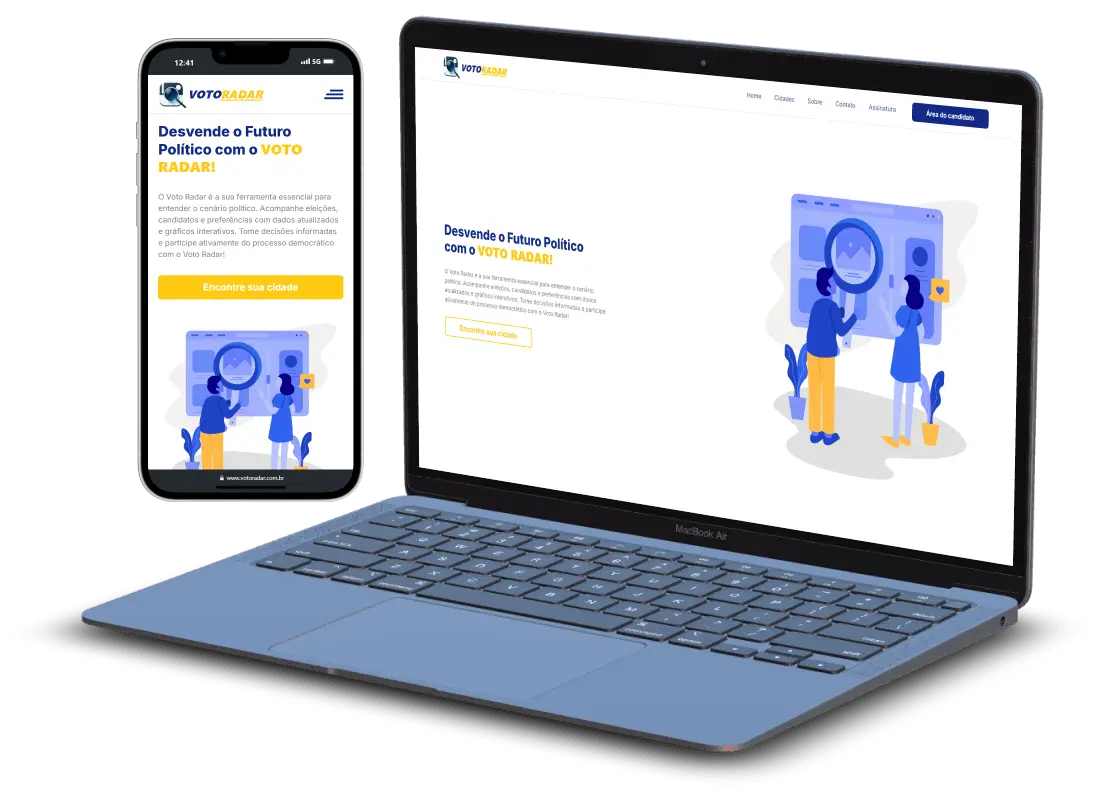
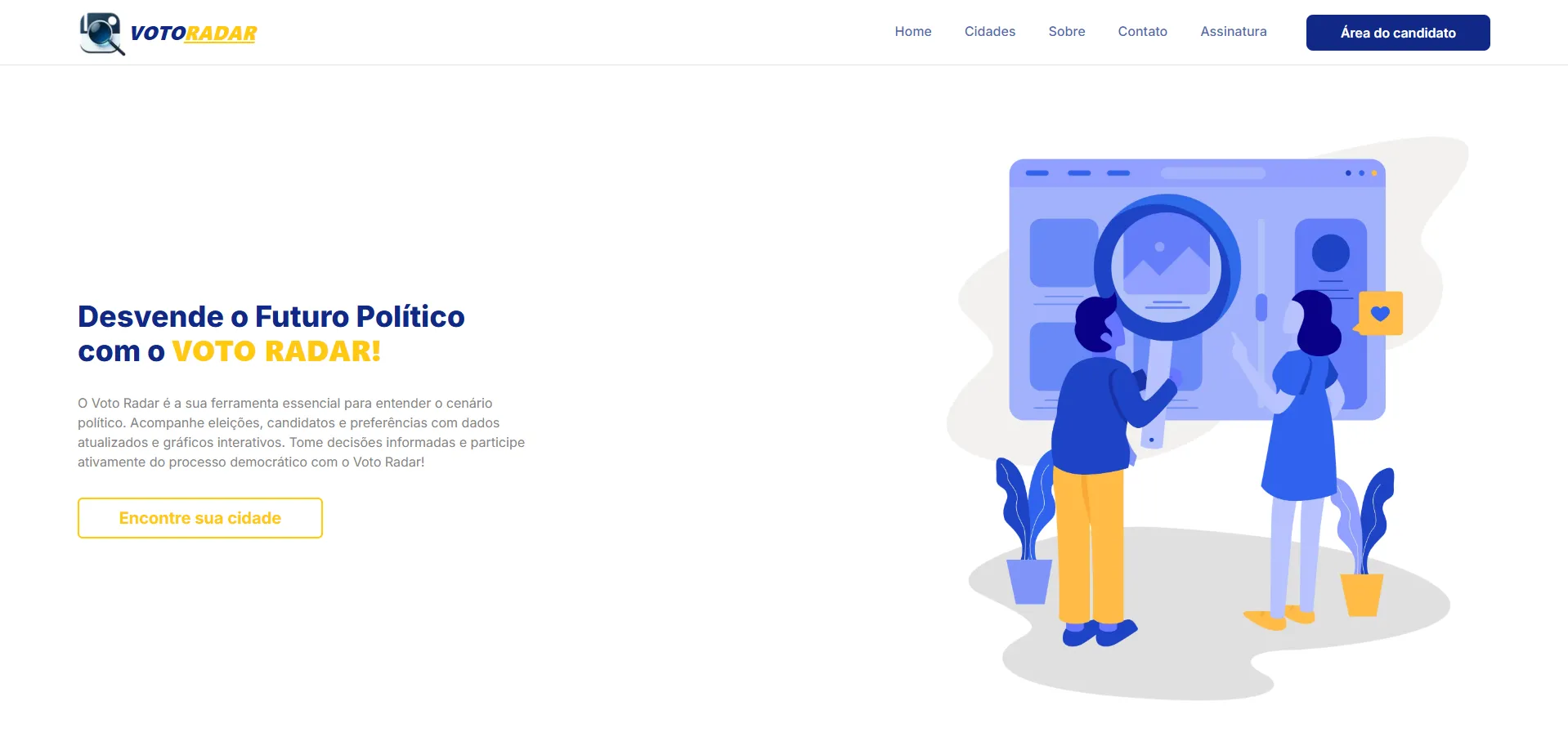
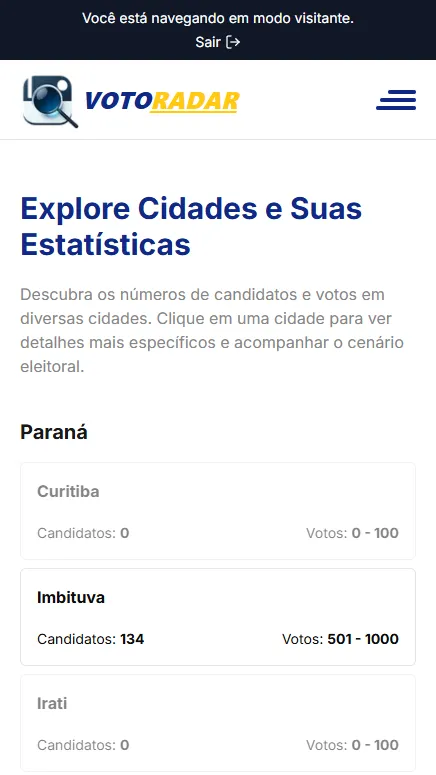
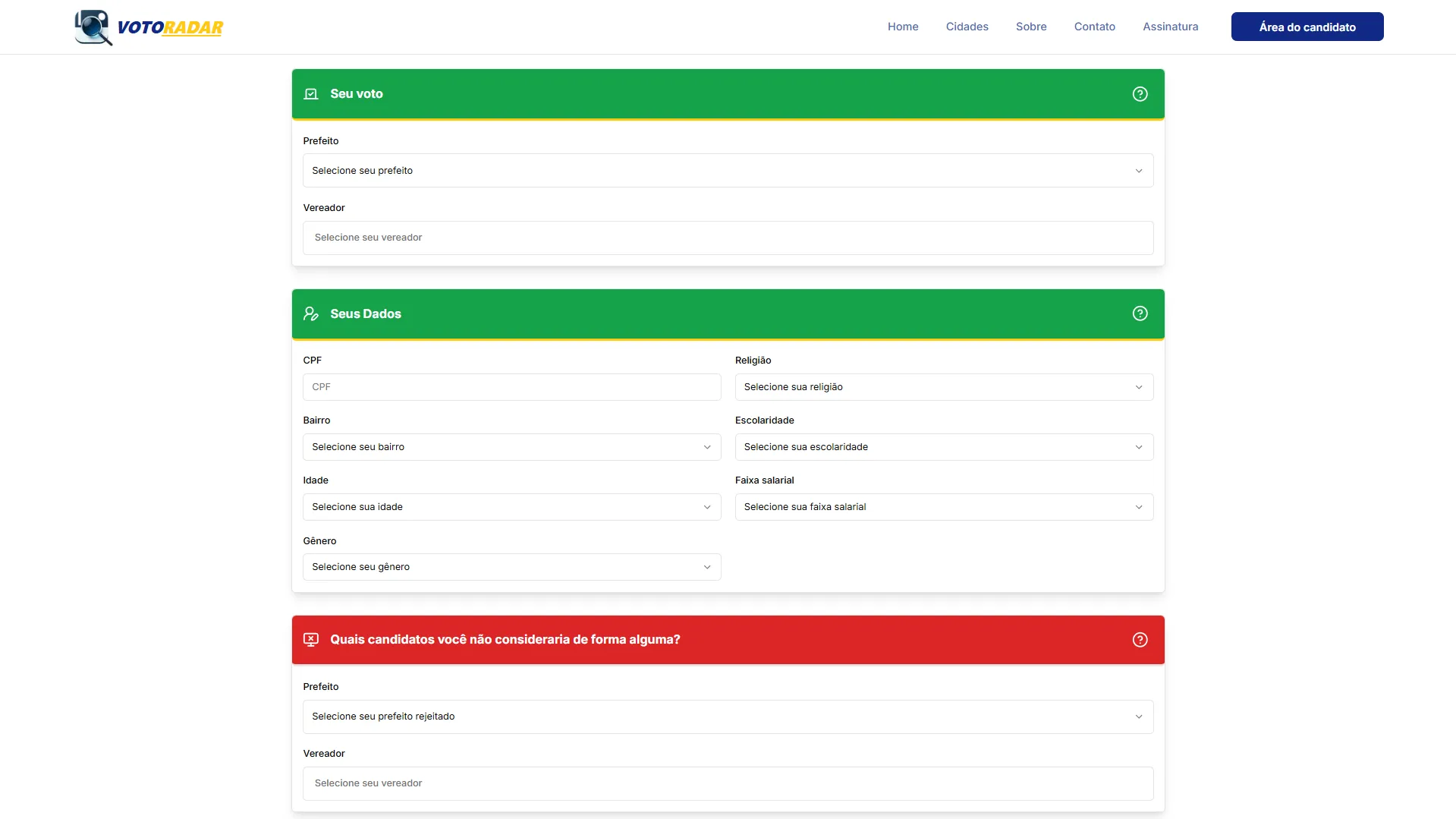
Voto Radar was built to fill a real gap: traditional electoral polling costs what most candidates can't afford. The platform flips the model — voters participate for free through a questionnaire inspired by classic political surveys, providing non-sensitive information and indicating who they would and would never vote for. Each city runs its own research cycle with the full list of registered candidates by office.
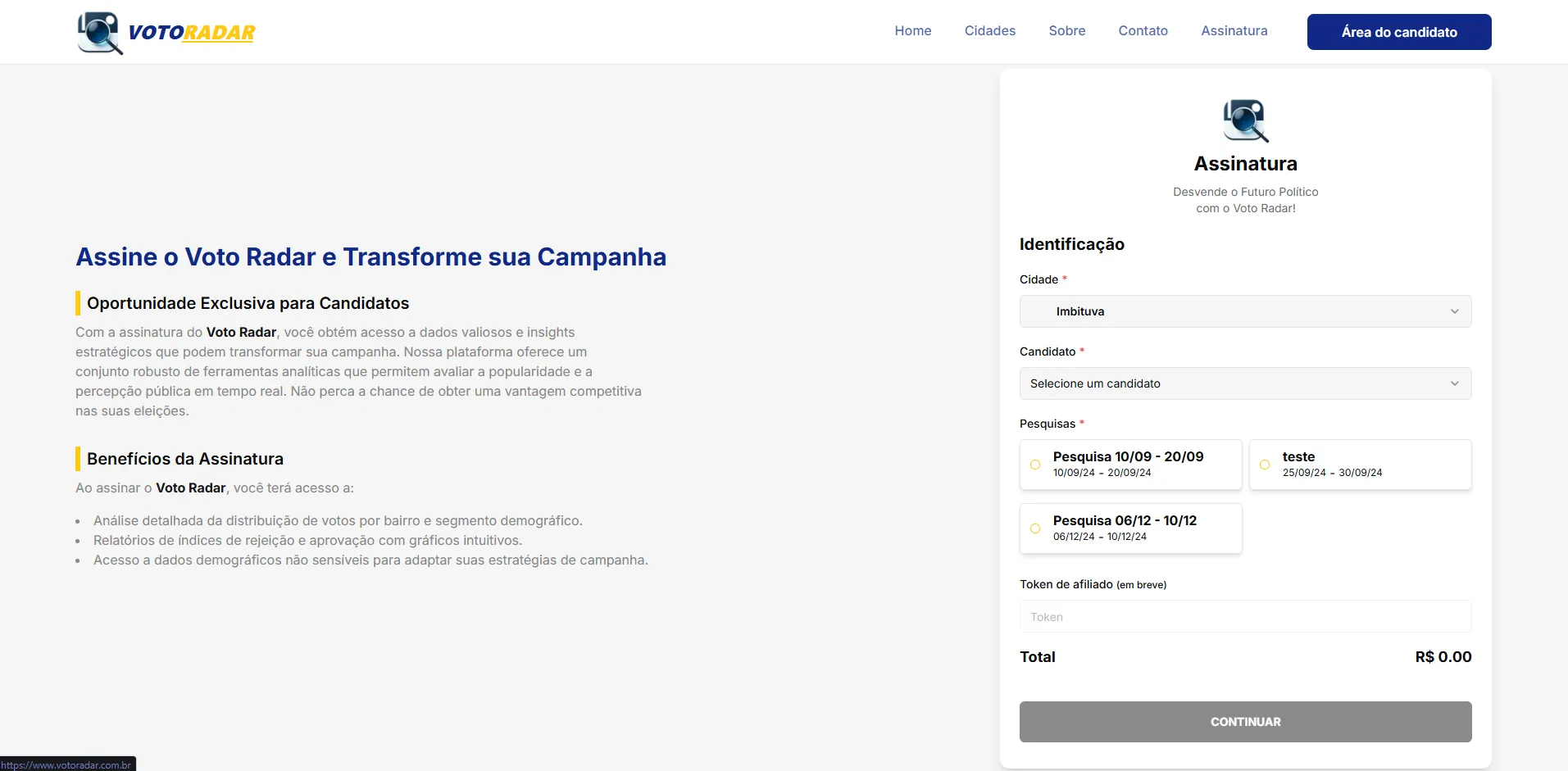
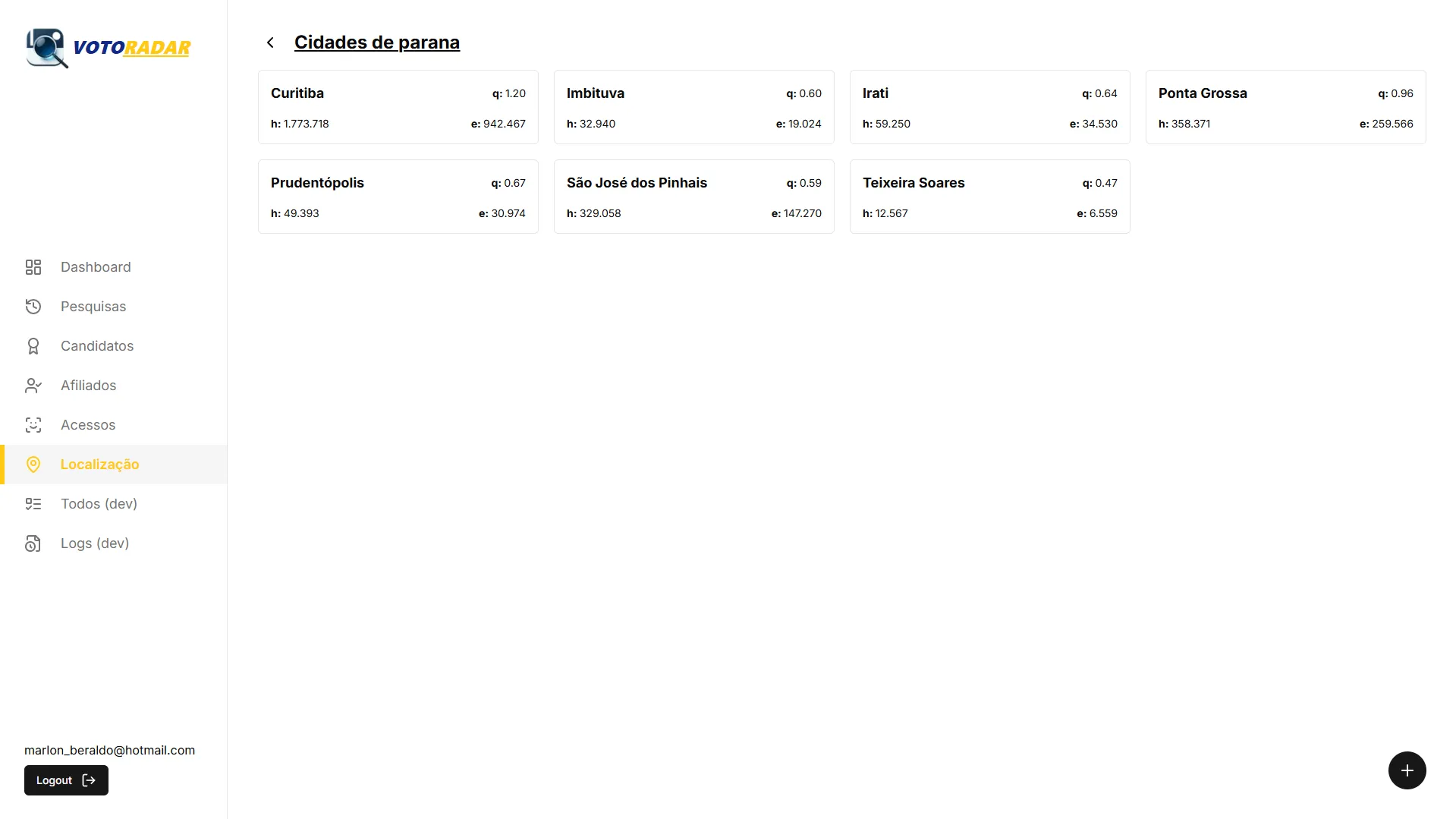
With the collected data, pre-registered candidates purchase access and enter an exclusive dashboard showing only their own campaign data: approval and rejection rates by neighborhood, voter trends, and strategic insights to guide decisions. No candidate sees the competition's data.
02
Challenge
The project had to go live in three weeks. What was compressed was design refinement — data reliability was non-negotiable. Ensuring one vote per CPF per city with rigorous validation, and research cycles with defined durations that refresh data each round, required careful modeling from the start.
Beyond the timeline, the product needed to launch while parts of the system were still under development — the vote collection flow had to work from the first cycle, and candidates needed to be able to purchase access and view results as soon as rounds went live.
03
Solution
CPF validation ensured integrity: one voter, one response per city per cycle. The per-candidate paid access model was structured with the Asaas gateway — each candidate buys access only to their own dashboard, with no visibility into the competition's data. The product was shipped in three weeks using Next.js, TypeScript, and PostgreSQL via Supabase.
The launch validated the concept strongly: 1,500 participants responded in two days. The result proved that democratizing live electoral insights is viable — affordable access for candidates and reliable data to support campaign decisions.