
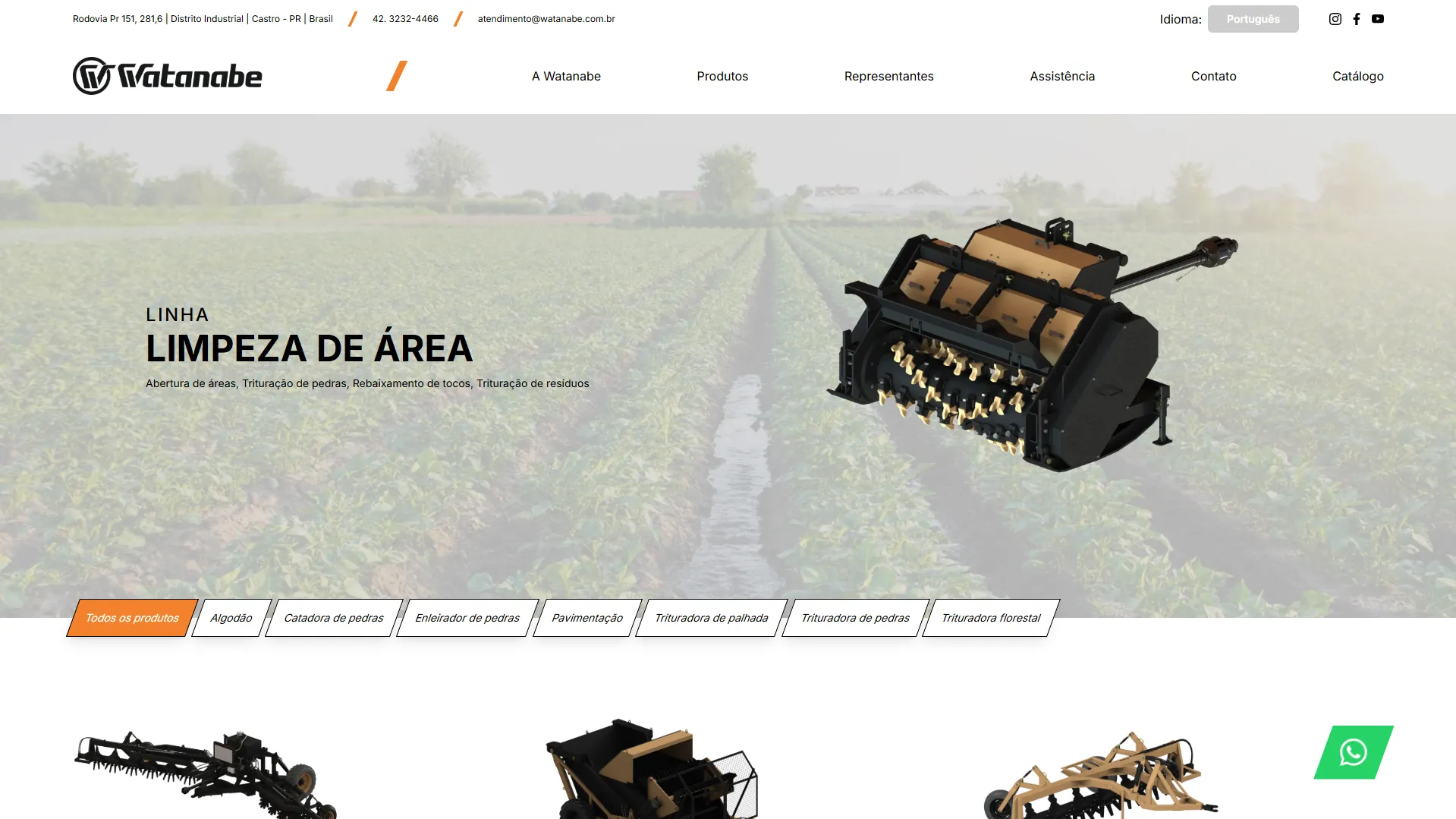
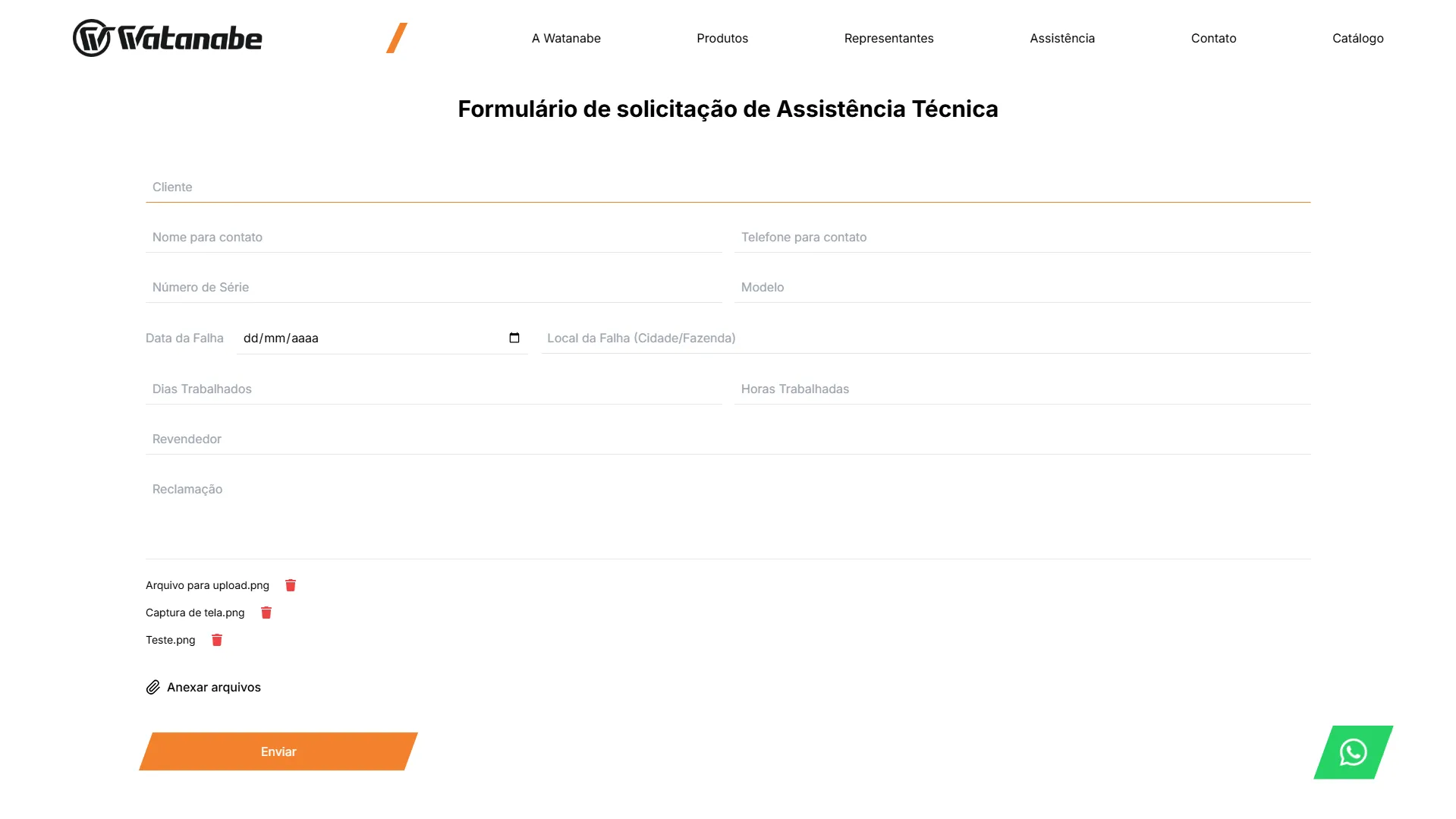
Pre-registered Watanabe clients access personalized catalogs for their own machinery in Portuguese, English, or Spanish. Technical assistance requests with file uploads — no password required, no accumulating stale data.
DesignAgência Ade!
View live project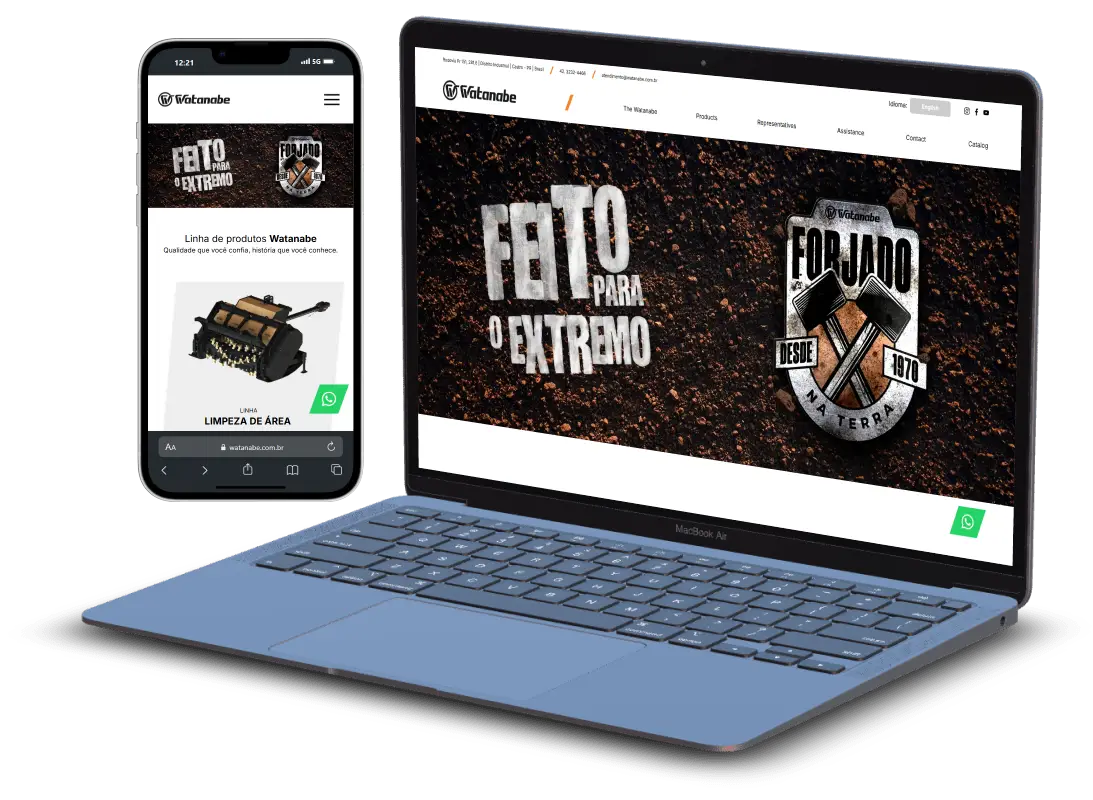
01
Overview
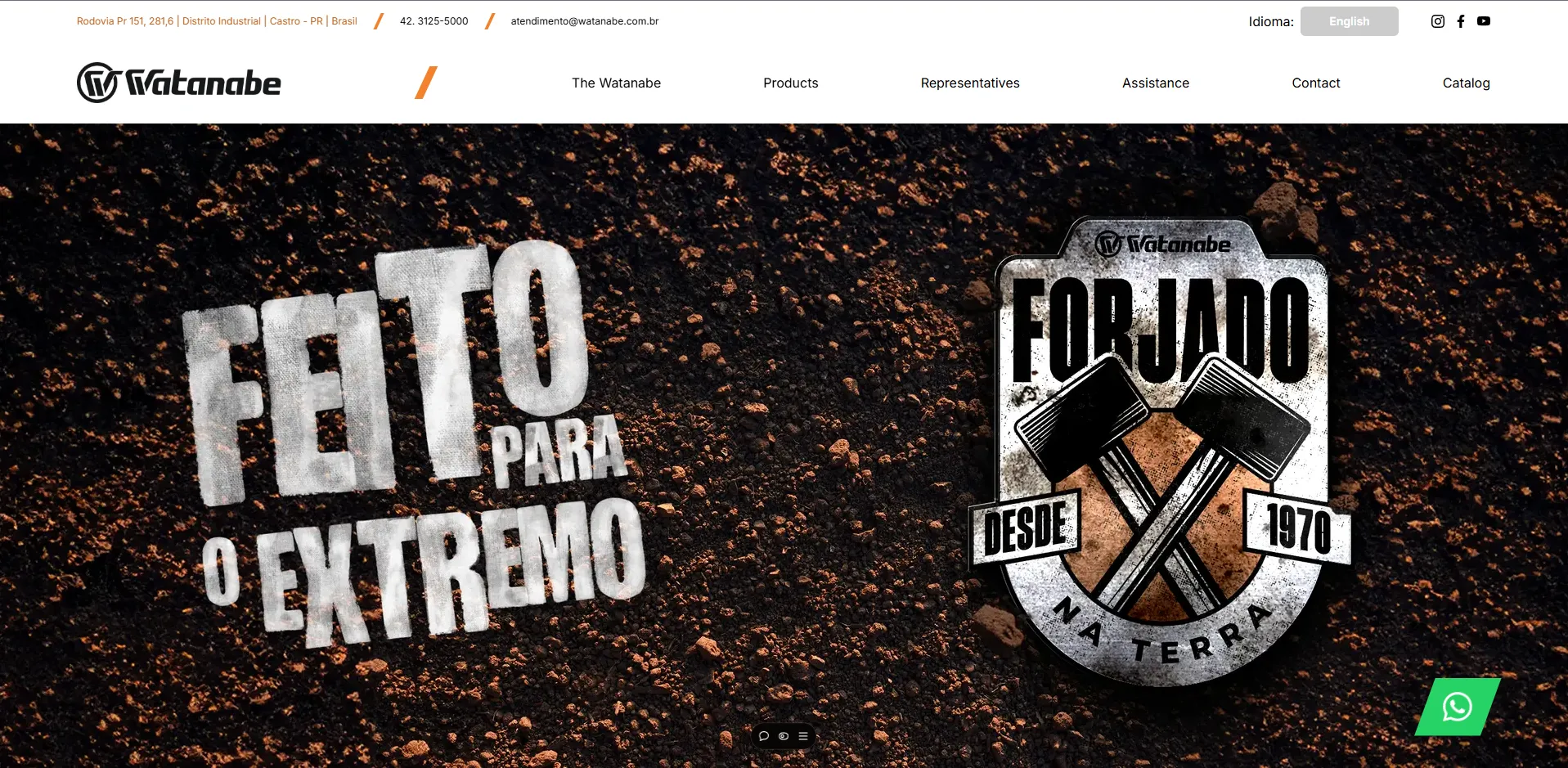
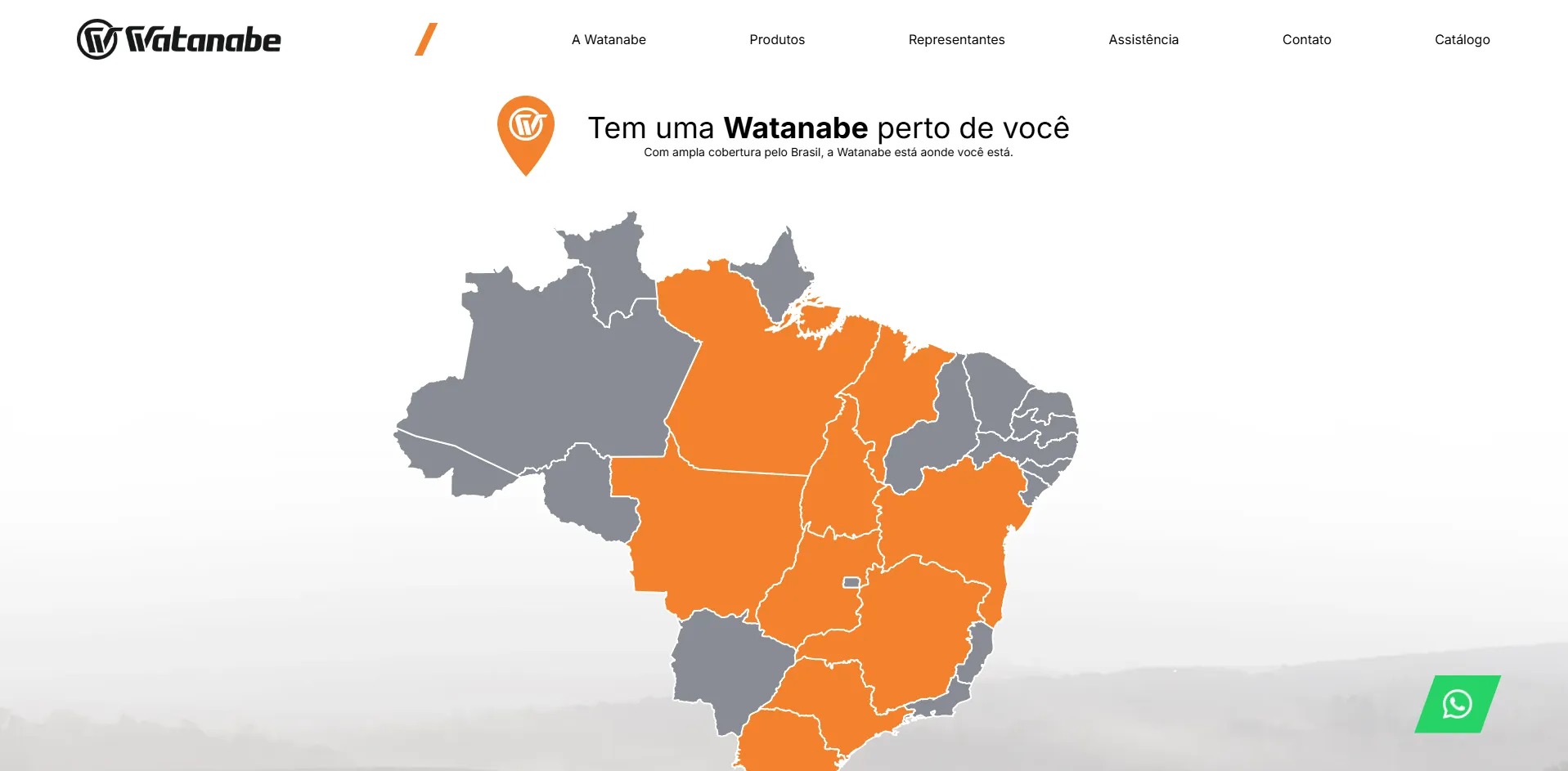
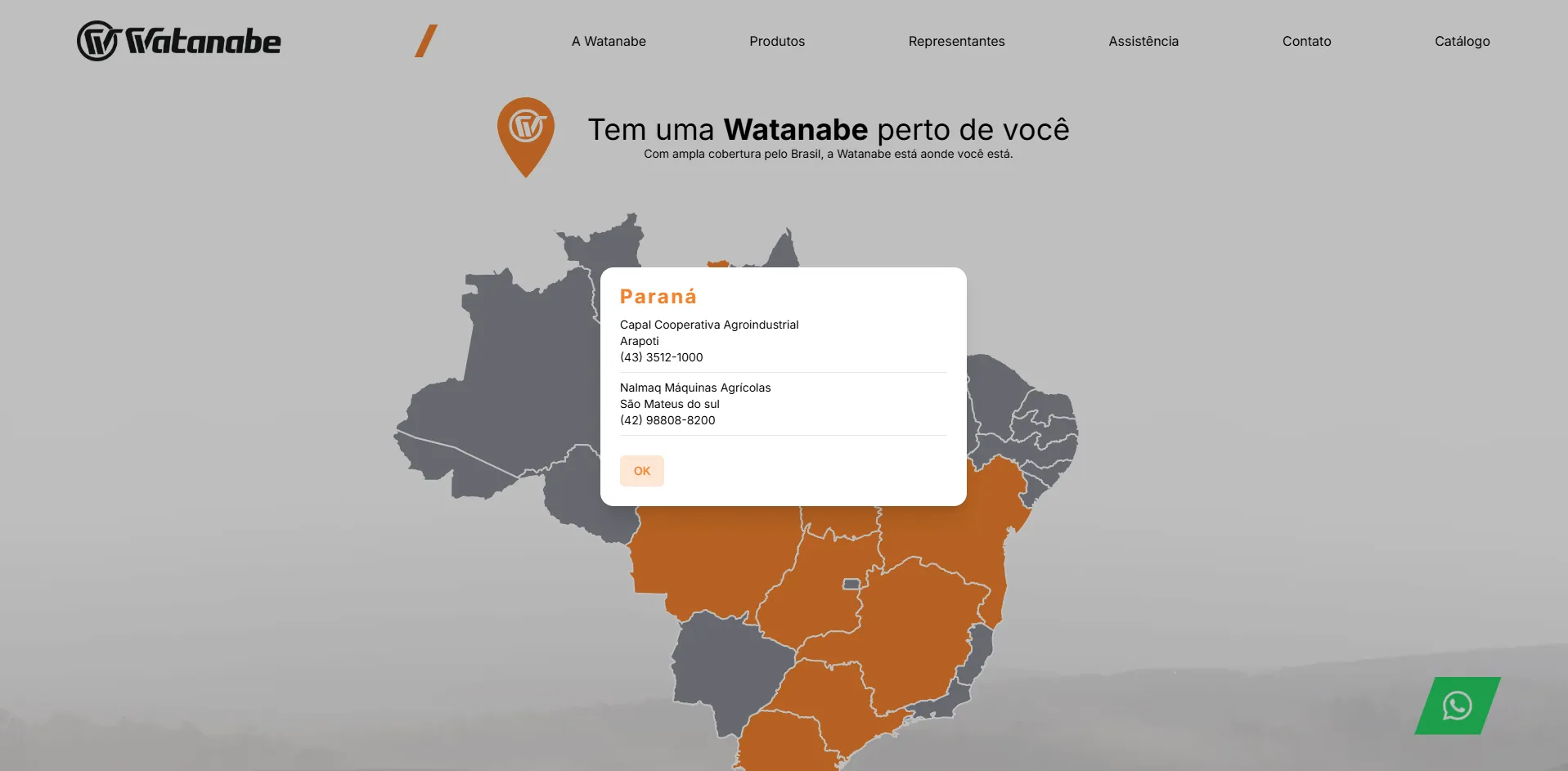
Watanabe is an industrial company that operates with clients in different countries and needed a website to communicate its products in three languages, centralize technical documentation per client, and offer a channel for technical assistance requests with file uploads. The audience is split between visitors seeking institutional information and pre-registered clients who access personalized catalogs with data related to their machinery and documents.
The technical assistance form accepts high-quality media files in large volumes. Files are automatically removed every 30 days — no stale data accumulates, no manual cleanup needed.
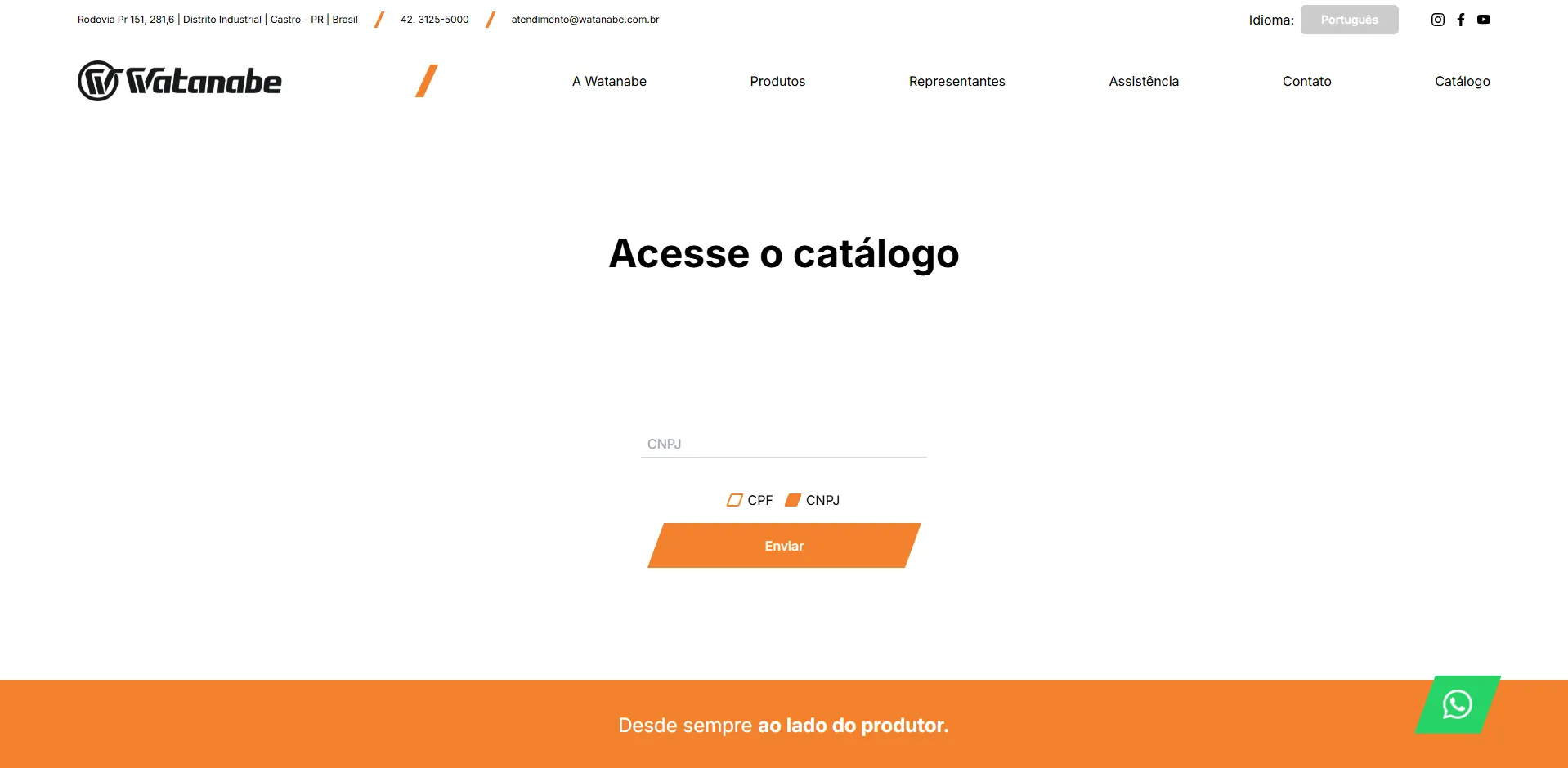
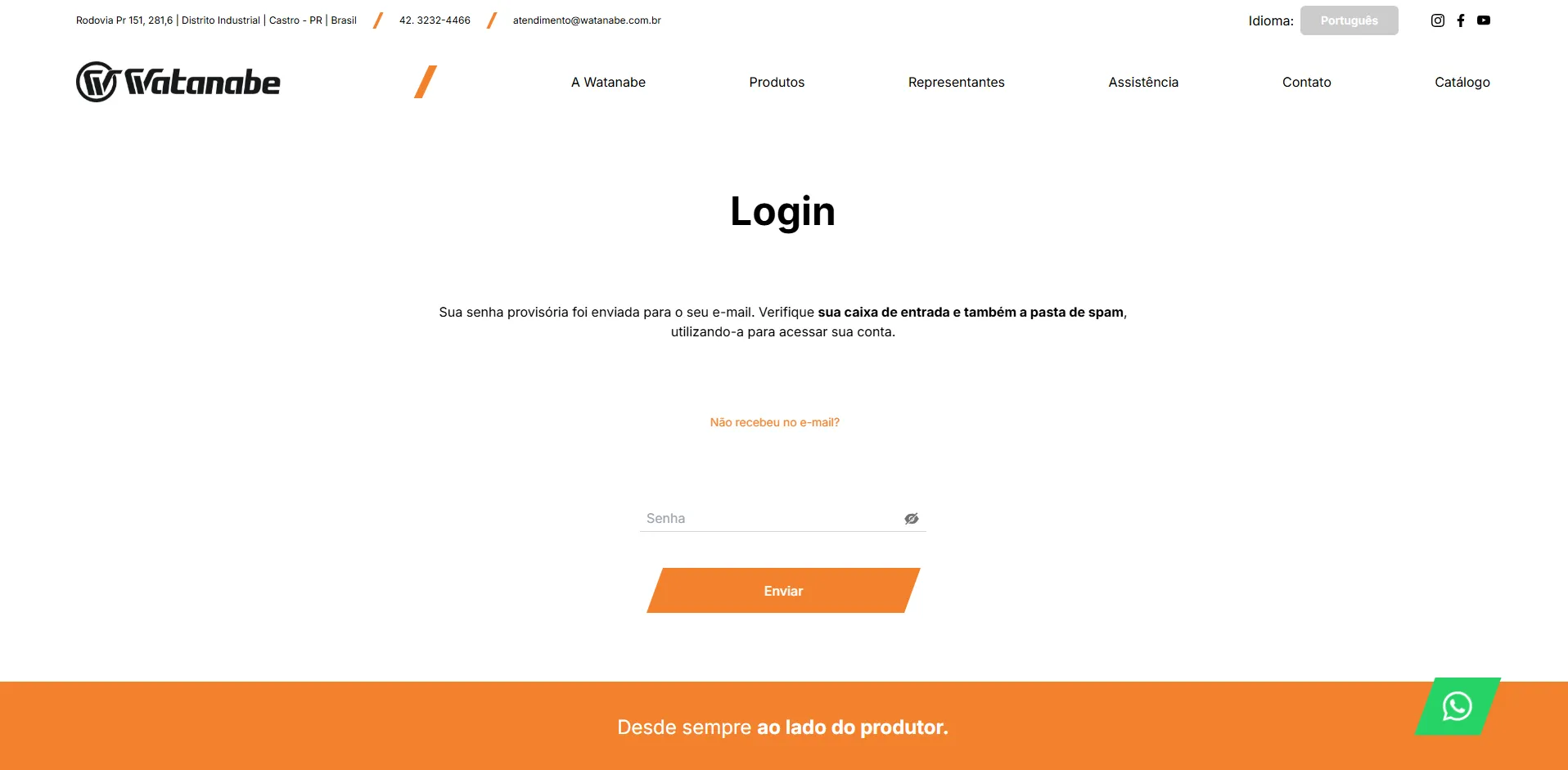
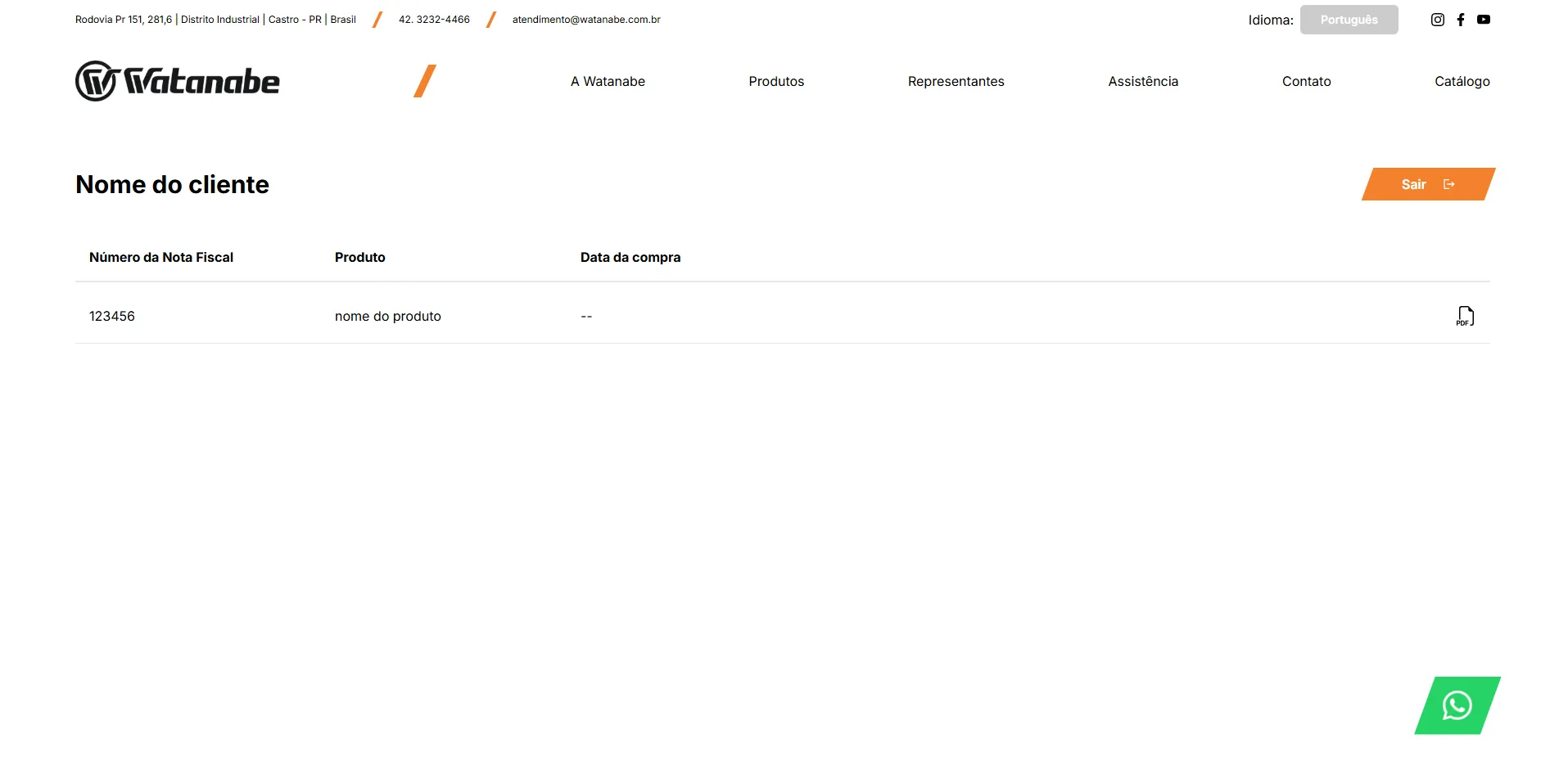
The site detects the visitor's language automatically and loads the correct content — no manual language selection needed. Pre-registered clients access catalogs with their own machinery data without creating a password: access expires with the temporary authentication code, leaving no open sessions.
02
Challenge
Real internationalization — not just string translation, but automatic language detection from the browser and dynamic locale routing — required careful configuration of Next.js middleware with [lang] routes. WordPress also needed full multilingual support so that CMS-managed content appeared in the correct language without duplicating the data structure or creating separate language posts without links between them.
The magic link authentication system was built from scratch: the pre-registered client enters their email, receives a temporary code, and enters it in a second step of the form — which only then grants access to the personalized catalog. Access expires with the code, with no permanent password and no indefinitely open sessions. The technical assistance form needed to accept large, high-quality files, but storing them indefinitely wasn't viable — the system required an automatic cleanup routine without relying on manual intervention.
03
Solution
The site detects the browser language and redirects automatically to the correct locale. Content comes from WordPress via WPGraphQL already segmented by language — each locale loads the right text without duplicated logic in the front end.
The magic link flow was integrated into the catalog access form in two steps: the code is generated on the server, sent by email, and validated in the second step before releasing the personalized catalog. For file storage, the form was integrated with Supabase Storage, with Vercel cron jobs running automatic cleanup every 30 days — keeping the bucket lean without any manual intervention.